
If your dog curls into a tight ball when they’re nervous, burrows into blankets or searches for a protected corner when the house gets noisy, it’s easy to understand the appeal of an anti anxiety dog bed.
These soft, often donut-shaped beds are marketed as creating a cozy and secure sleeping environment. Raised sides give dogs somewhere to nestle against, while plush materials can make the bed an inviting place to rest.
But there’s something important to understand before buying one:
A calming dog bed isn’t a treatment for anxiety.
A good bed can give your dog a comfortable, familiar place to retreat to and can form part of a calming environment. But if your dog has significant separation anxiety, noise phobia or another serious anxiety problem, buying a fluffy bed alone isn’t going to solve it.
So what should you actually look for?
Let’s separate useful features from marketing promises.
Can an Anti-Anxiety Dog Bed Really Help?
Possibly—but think comfort and security, rather than cure.
Dogs naturally have different sleeping preferences. Some stretch out across the floor. Others curl tightly into a ball, lean against cushions or burrow underneath blankets.
For dogs that like curling and nesting, a soft bed with raised edges can provide a comfortable resting place.
There’s also value in giving an anxious dog a predictable safe space.
The American Kennel Club recommends creating a calm place that your dog associates with positive experiences, explaining that a dog bed or mat can work well as that designated resting area.
That’s the benefit I’d concentrate on.
You’re not buying a medical treatment.
You’re creating a comfortable place where your dog can learn to settle and relax.
What Makes a Good Calming Dog Bed?
You’ll see plenty of dramatic claims when shopping for calming beds, but I’d concentrate on a handful of practical features.
Raised sides
The characteristic donut design isn’t purely decorative.
Raised sides give dogs something to curl against and can make the sleeping area feel more enclosed than a completely flat mat.
This can particularly suit dogs that naturally sleep curled up.
Soft material
Plush or faux-fur surfaces can make the bed more inviting to dogs that enjoy soft sleeping surfaces.
Don’t automatically assume fluffier means better, though.
Some dogs prefer cooler or firmer surfaces, particularly in warm climates.
Enough room to sleep naturally
This is one of the most important considerations.
A calming bed shouldn’t force your dog into an uncomfortable position simply because it’s described as cozy.
Measure your dog while they’re resting and compare those measurements with the manufacturer’s sizing recommendations.
Washability
This matters far more than many buying guides acknowledge.
Dog beds collect hair, dirt, saliva and odors. A removable washable cover—or a bed that can safely be machine washed—makes long-term ownership considerably easier.
A stable base
The bed shouldn’t constantly slide around when your dog steps into it.
Look for a design appropriate for the flooring where you’ll actually use it.
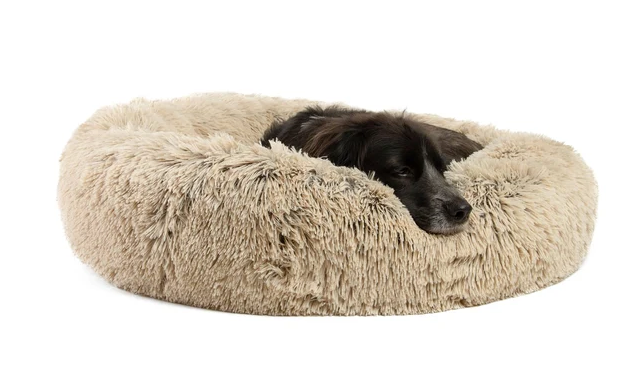
Best Friends by Sheri Original Calming Donut Dog Bed
Of the products featured in the original version of this article, this is the one I would still consider.
The Best Friends by Sheri Original Calming Donut Dog Bed is still actively sold by the manufacturer and retains the classic design most people picture when they hear “calming dog bed.”
It combines a round sleeping area with a raised outer rim and soft shag-style material.
According to the manufacturer, the current 30 × 30-inch version is designed for dogs up to 45 lb and uses polyester construction with AirLoft fibre filling. The 30-inch version also has a removable machine-washable shell.
What I like
The raised rim makes sense for dogs that enjoy curling up or resting their head against something.
The soft interior also gives burrowing and nesting dogs somewhere comfortable to settle.
Most importantly from an owner’s perspective, washability has been considered.
What I’d consider before buying
Don’t buy solely because the word “calming” appears in the product name.
First look at how your dog already sleeps.
If your dog routinely curls into cushions, burrows into blankets or sleeps pressed against the edge of their current bed, this design makes intuitive sense.
If they prefer stretching completely flat on a cool floor, a heavily padded donut bed may be less appealing.
And pay close attention to sizing.
The manufacturer’s current range includes multiple sizes, so measure rather than guessing.
Best suited to
I’d put this near the top of the list for:
dogs that naturally curl up, burrow or enjoy soft enclosed sleeping spaces.
Donut Bed vs Bolster Bed vs Flat Bed
This is where I think many “best anti-anxiety dog bed” lists get things wrong.
They assume every anxious dog wants the same thing.
They don’t.
Donut-style bed
Best suited to dogs that curl tightly, nest or like being surrounded by soft material.
Bolster bed
A good compromise for dogs that like resting their head or back against a raised edge but also enjoy stretching out.
Flat or orthopedic bed
Potentially better for dogs that prefer sprawling or need easier access to their sleeping surface.
The best calming bed isn’t necessarily the fluffiest one.
It’s the bed that matches your dog’s natural resting behaviour.
How to Choose the Right Size
Don’t rely solely on breed labels such as “small,” “medium” and “large.”
Measure your dog in their normal sleeping position.
If they curl up, measure the approximate space their body occupies while comfortably curled. If they frequently stretch out, a restrictive donut-style bed might not be the best design in the first place.
Then compare your measurements with the manufacturer’s dimensions and weight guidance.
When you’re between sizes, I’d generally rather give the dog sufficient room than squeeze them into a bed simply to create a tighter-looking nest.
Where Should You Put an Anti-Anxiety Dog Bed?
Placement can be almost as important as the bed.
Avoid automatically putting it wherever it looks best in the room.
Instead, watch where your dog naturally chooses to rest.
Many dogs prefer somewhere they can relax without being completely isolated from their family.
A quiet corner of the living room, bedroom or another familiar space may work better than placing the bed in a remote room your dog rarely visits.
Then build positive associations with that location.
The AKC suggests pairing a dog’s safe resting place with positive experiences such as treats, toys and undisturbed rest.
Never use the bed as somewhere your dog is sent as punishment.
You want:
“My bed is where good, peaceful things happen.”
What If My Dog Ignores the New Bed?
Don’t panic if your dog doesn’t immediately dive into it.
Dogs don’t read product descriptions.
To them, you’ve simply placed a strange new object in the house.
Put the bed somewhere your dog already likes resting. Allow them to investigate it voluntarily and reward calm interaction with the area.
You might place a familiar blanket or appropriate toy nearby if that helps make the space recognizable.
Give them time.
Trying to physically place or repeatedly command a nervous dog into their new “calming” bed rather defeats the purpose.
Can a Dog Bed Help With Separation Anxiety?
This is where marketing language needs to be treated carefully.
A familiar bed may form part of a dog’s comfortable environment, but a bed isn’t a treatment for separation anxiety.
If your dog panics when left alone, destroys doors or windows, vocalizes persistently, attempts to escape, injures themselves or shows other severe distress, don’t rely on buying another bed.
Those behaviours deserve proper assessment and an appropriate behaviour plan.
The same applies to severe fear of thunderstorms, fireworks or other triggers.
Comfortable bedding can support the environment.
It shouldn’t replace addressing the underlying problem.
What About Older Dogs?
Older dogs deserve slightly different consideration.
A very soft donut bed may look comfortable, but elderly dogs can have different support and mobility requirements.
Think about:
- how easily your dog can step into and out of the bed
- whether the surface provides adequate support
- whether your dog has arthritis or mobility problems
- whether they tend to overheat
- whether they need more room to change sleeping position
For an older dog with joint or mobility issues, comfort and physical support may be more important than choosing something marketed specifically as an anti-anxiety bed.
How Often Should You Wash a Calming Dog Bed?
Follow the manufacturer’s care instructions because materials and construction differ considerably.
Between washes, remove loose hair and check the bed for dampness, dirt or damage.
If the bed develops persistent dog odor, cleaning it regularly becomes even more important because your dog’s “safe place” shouldn’t become the smelliest object in the house.
And don’t forget blankets placed inside or on top of the bed.
Your existing Zendogtips article on getting dog smell out of blankets would make a very natural internal link right here.
Use this sentence:
If your dog’s favourite blankets have developed that familiar canine smell, our guide to getting dog smell out of blankets explains how to freshen them without simply covering the odor.
Link “getting dog smell out of blankets” to your resurrected blanket article.
Frequently Asked Questions
Do anti-anxiety dog beds actually work?
They can provide a comfortable, secure resting environment for dogs that enjoy soft, enclosed sleeping spaces. However, there’s no reason to expect a bed alone to resolve significant canine anxiety.
What type of bed is best for an anxious dog?
That depends on how the dog naturally sleeps. Dogs that curl and nest may enjoy a donut-style bed, while dogs that stretch out may prefer a bolster or flatter design.
Are donut beds good for dogs?
They can be excellent for dogs that enjoy curling up and leaning against raised sides. They won’t necessarily suit every dog, particularly those that prefer cooler or more open sleeping surfaces.
Where should I put my dog’s calming bed?
Choose a relatively quiet location where your dog already feels comfortable. For many dogs, that means somewhere away from heavy foot traffic but still close enough to family activity that they don’t feel isolated.
Will an anti-anxiety bed help during thunderstorms?
A familiar resting place may be one component of a dog’s safe environment, but dogs with significant thunderstorm or noise anxiety may need additional behavioural or veterinary support.
Should I buy a bigger calming dog bed?
Choose according to your dog’s measurements and sleeping style rather than simply buying the smallest bed they’ll physically fit into. Your dog should be able to settle naturally and comfortably.
Final Thoughts
The best anti anxiety dog bed isn’t necessarily the one making the biggest promises.
It’s the one your dog actually wants to sleep in.
Look at how your dog rests now. Do they curl into a tight ball? Burrow underneath blankets? Lean against the side of the sofa? Or stretch across the coolest patch of floor they can find?
Those behaviours tell you more about the right bed than the word “calming” on a product label.
A soft donut bed such as the Best Friends by Sheri design can be an appealing option for dogs that love nesting and curling up. But its real value is much simpler than some marketing suggests:
it gives your dog a comfortable place of their own.
Pair that space with calm experiences and positive associations, and it can become a useful part of helping your dog settle.
For significant or worsening anxiety, however, treat the bed as supportive comfort—not a substitute for addressing the underlying cause.